About

About

Welcome to my website. I am the author of ‘Vietnamese – Simple Vietnamese Food To Cook At Home’. I am a photographer and film maker. You can book into my supper club, Vietnamese cooking classes, buy my book, check out my photography and lots more here.

Please follow me on instagram @loveleluu – Thank you so much for visiting x

Food Styling & Photograhy

My Photography Work

Supper Club

Supper Club

The supper club is held in my home in London Fields, Hackney. It is like a dinner party in the tradition of a Vietnamese feast with homemade Vietnamese food.

Classes

Classes

Vietnamese food is about the balance of flavours, of sweet, salty and sour – there is no measuring device that can ever match your own taste buds.

Subscribe to Blog

Enter your email address to subscribe to this blog and receive notifications of new posts by email.

Congee For The Soul

Romas Foord for the Observer

Romas Foord for the Observer

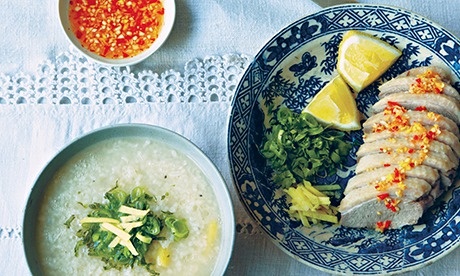
Click here for my recipe: Seabass Congee with Kale, Dill & Ginger from The Observer Food Monthly

As featured in The Huffington Post

Want chicken soup for the soul? Give congee to your soul! 

Congee is all about well-being and vitality. When eaten, it really feels like it heals all that is bad in the world. It is comfort food like being in bed on a miserable day with a warm, soft cosy blanket and your favourite TV show. Its like something you get from your grandmother or your mother.

Anyone at any level in the kitchen can achieve a congee. Everyone should learn about congee, cook it, enjoy it as often as possible and tell one and all how great it is.

We always make too much rice, don’t waste it! Add a small bowl of left over rice, perhaps scraps from a roast, forage a fridge and use up any herbs and vegetables going to about 6 cups of chicken stock and you’ve got one quick, healthy and delicious meal under 15 mins.

What is congee?
Light, delicate, easy to digest and soothing, congee is a rice based soup, similar to porridge or risotto. It is a favourite among many Asian countries ranging from Japan (okayu) to China (jook), Vietnam (cháo) to Myanmar (hsan byok), India (kanji) to Indonesia (bubur). Every country, region or person will make congee according to how they like it. There are no rules, it is hard to go wrong and you decide how simple or extravagant you want to go.

How to make congee
Simmer cooked rice in water or seasoned broth until the rice grains have expanded to your liking. It can be consumed thick or watery. Its up to you! To make a utterly delicious congee, it is important to use a good quality stock- using free range meat and bones from poultry, pork or good quality fresh fish and seafood. A good broth is the secret to an excellent congee.

2015-02-23-carouselcongee.jpg
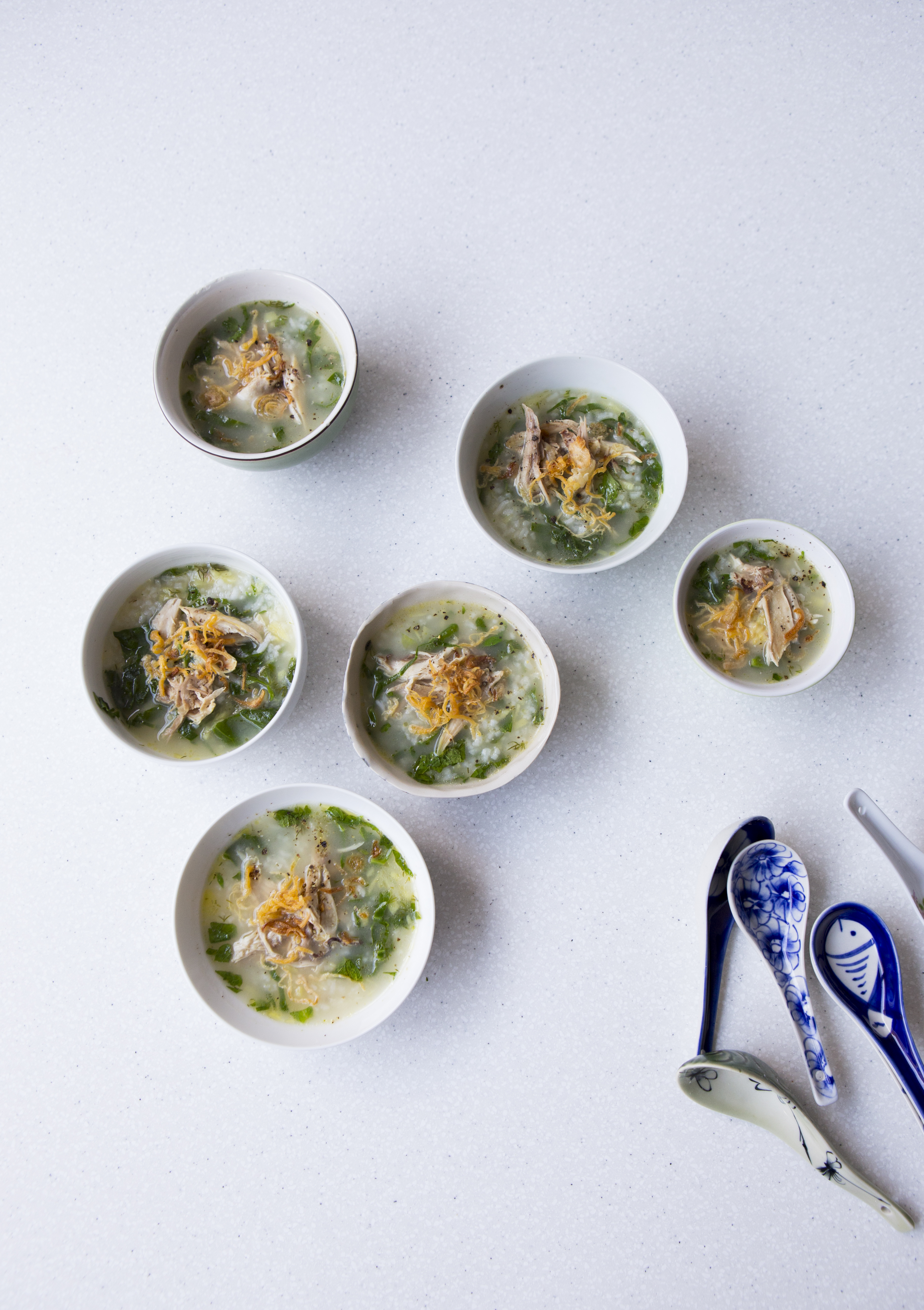
Chicken congee with sprout top, pork floss, fried shallots, ginger & dill – Photography by Uyen Luu

Pimp it up
Season with a little bit of rock sugar, premium fish sauce or soy sauce and depending on how you’re feeling, garnish with an abundance of fresh herbs and a pinch of black or white pepper. Add a little minced pork or chicken, slices of cold cut ham, pork floss, caramelised shallots, fish cakes,eggs, green leaves, root vegetables or pickles. The congee is your blank canvas, your oyster.

Add texture
Tally up favourite ingredients like crunchy pickles, fried onions, crispy fried ham or wontons. I love mine with fish fingers too.

When is congee eaten?
An exquisite congee, rich with fresh and vibrant flavours is great for breakfast or a late night supper. But when you’re feeling under the weather, a plain and simple congee is the thing most South East Asians will whip up without a doubt because its much better to endure something warm, gentle and merciful on the stomach.

The body needs to be recovering, not digesting. Congee helps with all the fortifying goodness of chicken, fish or vegetable stock. Adding finely chopped ginger helps cleanse and aids digestion. Gifting someone a bowl of congee is one of the best things you can do to help someone get better. In many countries, hospitals will serve patients congee, like your mother would.

Great baby food
After breastfeeding, babies are brought up on congee because of its soft, oozy texture. It is a platform to slowly introduce flavours, meat and vegetables into their diet before they can eat solid foods. Adding bone broth and mashed vegetables provides babies with all the nutrients like calcium for strong growth.

From rags to riches
Congee is considered a poor man’s meal (and never eaten in times of celebration like at the start of lunar new year because it symbolises poverty and hardship). Those who can not afford to buy a lot of rice have to make do with only a little – expands one portion of rice to serve at least four. Any additions to the congee, like ground pork configures to a small modest amount. It is a frugal and un-wasteful way of eating without much sacrifice on the palate.

However, congee is such a loved peasant dish because of its many health benefits as well as its flavoursome qualities, congee can also be be luxurious, for example, duck congee or lobster and scallop congee which are favourites at a Vietnamese table with invited guests.

2015-02-23-Duckcongee008.jpg
Photography by Clare Winfield
Duck Congee recipe from My Vietnamese Kitchen here

Congee is great for you. Taste the healthiness. This is what eating well is all about.

You can find congee recipes and many more in My Vietnamese Kitchen by Uyen Luu, published by Ryland Peters & Small

Follow Uyen Luu on Instagram @loveleluu

How To Poach Well

Processed with VSCOcam with f2 presetLast year, I filmed with Raymond Blanc for his BBC TV series, How To Cook Well (with thanks Rocket & Squash, who was one of the producers of the show). I demonstrated to Chef my way of making pho and how its entire process is all about “poaching” on an episode about, poaching. You can read a little about it hereIMG_9338

It didn’t occur to me before that, that poaching is what I do on a regular basis because when we think of poaching food, we think of something that is blandly boiled in hot water. The result, something overcooked, watery and unappetising.

However in countries like Vietnam, poaching is a way of life. Its an alchemy; something to master. Poaching is an easy art form that sings in the delicious and healthy cuisine we so enjoy. To poach is to create broth, noodle soups, to cook meat and fish to perfection; blanch vegetables, maintaing the flavour & texture of vegetables. To poach is to combine flavours, from meat and fish to intricate complexion of herbs and vegetables. It is about pulling the characters of ingredients together to create and retain wonderful, sensual and textual taste to your palate as while being healthy and delicious. Poaching with different ingredients flavours the meat/ fish / vegetables and in return, they flavour the broth.

Poaching can either be a fast or a slow process depending on what it is being made but it is never a sacrifice on flavour. Everything can be made within one pot, creating two or three meals from that pot. Breakfast, lunch and dinner! For example, a poached chicken can make chicken salads, chicken noodle soups, steamed rice in chicken broth, congee, vegetable soups and so on.  Once  the basic principles are mastered, the choices in poaching are endless.Processed with VSCOcam with f2 presetSpices for ph?

If we take ph? for instance, the broth is flavoured by the different cuts of meat and bones or vegetables, the spices blend and mellow out together over time on a gentle simmer. Even when the broth is laddled into a bowl for serving, poaching rare pieces of beef or poach an egg that is cracked in. The hot broth cooks the raw spring onions and thinly sliced onion and saw tooth & coriander herbs tenderly, still leaving bite. When doing a good poach, understanding the temperature of the the pot and the broth is key to what it does to the rest of the dishes’s ingredients.

Consommé
A lot of Vietnamese soups and noodle soups are based on making a good refined consommé with a wide variety of flavours. There may be many techniques to making a clear broth depending on the ingredients used. It can get complicated if you want to get all cheffy but if you just want a delicious simple dinner here are some of my tips:Processed with VSCOcam with f2 preset

Beef (ph?)

If we look at a ph? broth, my technique to making a clear broth is simply cleaning the beef and beef bones in a pre-poach by blanching it in boiling water for 10 minutes and then rid all of the water it sat in; clean all the pieces under running water; rewash the pot and then bringing fresh water back to the boil. By this time, the cleaned meat is ready to be poached with its spices, charred onion and ginger. Once the broth comes to the boil, it must then only simmer for the rest of the time. I usually simmer my pho broth for about 4 hours, taking the meat out after 2 hours.DSC_0035

Processed with VSCOcam with f2 preset

Chicken

In the kitchen, so much can be done with chicken stock which boasts many healthy benefits as it boosts the immune system with the minerals it contains from the bones and carcass. Simply put a whole free range, corn fed chicken into a pot and pour boiling water from a kettle to submerge and cook on a low boil for about an hour with the lid on, removing any scum that surfaces after about 15 – 20 minutes.

The broth can be flavoured with many things such as ginger, vegetables, fish/ seafood etc. It can be as complicated or as simple as you wish but for sure, a good chicken broth carries anything and makes everything better than it would be without it.

You can also use the chicken broth to cook rice.

970992_608126805923273_628852373_n

Processed with VSCOcam with f2 preset

Noodle Soups & Congee

Always having a plain chicken broth in the kitchen means you can pull together a noodle soup for breakfast, lunch or dinner at a moment’s notice. You can make congee from left over rice – so that nothing goes to waste and is especially good for your system when you are feeling poorly. It is also so delicious when you get your broth right. Just add finely chopped ginger, perhaps a fillet of fish to poach gently with the stock, season with fish sauce, a tiny rock of sugar, some herbs or spring onions. From the moment they are born, Vietnamese babies are on a congee diet until they can chew.Processed with VSCOcam with f2 presetCongee with trout

Congee is a rice soup made from left over rice in stock simmered over time. A small bowl of rice should make congee enough for 2 – 4 people. Its really healthy and smoothing. You can use it as a base to eat with many things. I like my congee still with a little bite from the rice grains, silky and runny. It could also be made way in advance too.

Fish

Poaching fish doesn’t take very long, you can have your congee ready within 15 mins from start to finish. Depending on the size of the fish/ fillets you only need to poach for a couple of minutes, leaving the fish nice and tender. Or you can pan fry fillets and mix it all in with fresh herbs at the end.

Processed with VSCOcam with f2 presetMung bean noodles with Vietnamese ham and hot mint

Processed with VSCOcam with f2 presetChinese mustard leaves, tofu & ginger soup

Processed with VSCOcam with f2 presetWinter melon soup with ginger and coriander

Depth & Flavour
When you start poaching, the spices and ingredients used needs to marry and like with relationships, they need a bit of time to get to know each other in calm climates not a violent storm, so simmer over time and don’t boil! Keep the lid on. Only bring the broth to the boil just before you are ready to serve.

Fish sauce

Using a good fish sauce to season the broth is one of the most fundamental things as it aids the salty and umami flavours of your taste buds. Always use a premium quality fish sauce if you can afford it. You can also use seaweed and radishes like daikon/ mooli or kohl rabi.

Rock sugar

To aid the sweet flavours, add a piece of rock sugar, its not the same as regular sugar, its a milder sweet that makes a broth taste complete.

Stock cubes

Good quality stock cubes can turn something to another and I am not ashamed of using them if I am not in the mood to wait for hours or I just want something quick.

Bones

Fish and meat bones are obtainable from a fish monger or  butcher, most of the times for a cost of a smile. Fish heads are great for flavouring broth as are marrow bones and pigs trotters.IMG_5368Chicken & bamboo noodle soup

Salads

Chicken, seafood, fish and pork can be poached and used in a variety of salads and can be served with rice, in fresh rolls, with prawn crackers or on its own, leaving the broth for other thingsProcessed with VSCOcam with f2 preset

IMG_1676Poached prawns & pork belly for fresh salad rolls

Processed with VSCOcam with f2 presetUdon noodles with chicken & cabbage

Without meaning to be, Vietnamese food is healthy, fresh and light. Whether you’re on a frugal budget or not, poaching is the way forward, it uses chicken, beef, pork, fish and vegetables to capacity and its delicious!

You can follow me on instagram for daily adventures in eating: @loveleluu

How To Roll Phan Thiết Summer Rolls

Phan Thiet Summer Rolls3

Every city, every region has their own special summer rolls. In my mother’s home town, Phan Thi?t, they are famous for their special summer rolls.

Egg, shredded pork skin in roasted rice, crispy spring rolls, pickled ham, mint & fish mint. All wrapped with rice paper.

Here is a short film of a summer roll street vendor, he makes a good few hundred a night, he doesn’t stop. He doesn’t wet the rice paper because its the type of paper that doesn’t need it as the herbs and ingredients gives it its own moistness.

Phan Thiet Summer Roll from Uyen Luu on Vimeo.

Phan Thiet Summer Rolls copy

Phan Thiet Summer Rolls4

Phan Thiet Summer Rolls1

Phan Thiet Summer Rolls8

Phan Thiet Summer Rolls10

Phan Thiet Summer Rolls6

Phan Thiet Summer Rolls7

Phan Thiet Summer Rolls5

Phan Thiet Summer Rolls2

Food Styling With Uyen Luu – On The Good Food Channel

Create beautiful photographs of the food that you cook at home with just a few simple steps.

If you enjoy taking photos of a kitchen creation, it can be easily incorporated into the ritual of cooking itself. I usually take my daily food pictures with my iphone. Just one snap and off I go and eat it all up!

Create a background

I have a few props to set up at the ready, especially while waiting for water to boil or things to cook. I create a simple scene and a mood on a table surface so that it is ready for when the food is cooked. After all, you want to eat the food as soon as it’s cooked and while it’s still warm.

Backgrounds can be simple, like the table itself or pieces of fabric such as tablecloth or napkins. Chopping boards and serving trays add an element of style and homeliness to the image. Plain walls and areas with no personal clutter work well, otherwise make birds’ eye view shots.

Use props

Props give food a sense of belonging and personality; you can have lots of fun with it. Sometimes it can be as simple as the book you’re reading or cutlery and kitchen utensils – whatever it is you need to eat the food or to serve the food.

Look at the frame of the picture and see how the props and food are angled. Avoid pointing things towards one direction, or it might look too composed.

One way is to fill the frame with items in a zig zag, from top to bottom, so that the eye can move all around the picture. Avoid things that aren’t relevant to the picture, for example a TV remote control.

Ideally, the image is there to create a desirable mood for the dish or ingredient and is supposed to bring on food envy and make people want to recreat the dish.

Get the lighting right

Food photographs are hugely dependant on good natural daylight and it should be used whenever possible, even if it means preparing dinner at breakfast during the winter months. Daylight adds a natural dimension to food because it will show the true and natural colours of ingredients.

Always bring the food to the nearest window to take a photo if you can. If using artificial lighting, place the food underneath the lamp to light it to avoid shadows or invest in a daylight bulb.

Strike a pose

Styling the dish is the second important element. Sometimes I prepare a styled plate of food with a small amount with every ingredient visible, but never as much as I would eat. Showing a huge plate of food is never that appetising to the viewer.

Be minimal with garnishes and sauces. Try not to cover everything in gravy but instead have a jug of gravy on the side. When plating the food, try not to use any burnt bits or overcooked ingredients that have lost their shape. Place the best looking bits on top to show it off.

If the dish is complicated, like a roast dinner, it is best to use fewer props. If it is simplistic, like pasta with pesto, go for more props. When selecting a mood for the picture, consider the weather and the seasons. Think about the main colours of the food, for instance if it’s a plate of pasta with green ingredients, add a dash of red or yellow somewhere, be it with a slice of chilli or lemon or the red handle of a parmesan grater.

I always share a quick snap of the food that I cook on Instagram. Then I go and load a lot more onto my plate and eat it all!

For more food photo inspiration, take a look at the Good Food Channel’s Instagram.

Uyen Luu’s new book My Vietnamese Kitchen is now available to pre-order on Amazon.

Introduction To Vietnamese Cooking

As published on The Good Food Channel
pho bo

In the first of her series of blog posts on how to cook Vietnamese food, guest blogger Uyen Luu shares the basic principles behind Vietnamese cooking.

There is a certain solitary quietness when bent over a steaming hot bowl of phó, slurping away and sucking at noodles. The broth is laced with the fragrant spices of star anise, coriander seeds, cinnamon and cloves, with top notes of fresh spring onions, coriander, basil, saw tooth herbs and lemon.

Vietnamese cuisine is one of the most flavoursome in the world, with many of its basic principles based on satisfying every taste bud. Preparing and cooking Vietnamese food is about fine tuning tasting skills to balance and master sweet, sour, salty, umani, bitter and hot flavours. It is about combining perfect textures, such as silky meat or fish with crunchy vegetables or herbs to satisfy the bite.

Vietnamese pho

Find a balance

Vietnamese food is about accomplishing a perfect balance in taste, in texture and the lightness of being. Many people naturally follow the yin and yang principles in combining ingredients, for example, a soup with hearty ginger to warm up the body is contrasted with refreshing, cool leaves like pak choi to harmonise the feeling in your body. Eating in balance is a major factor in keeping healthy and many believe that food is medicine.

To maintain an equilibrium, plenty of refreshing shakes, like avocado, papaya, pennyswort and watermelon, are drank as snacks, especially in the evenings to freshen the body before bedtime.

Vietnamese salad

Eat your influences

Vietnam has taken much inspiration from its occupiers, especially the French. The streets are buzzing with food and its aromas, from barbecued meat-filled baguettes (bánh mì), hot pork pastries, crunchy carrot salads and beef steaks with French fries.

The famous noodle soup, phó, was influenced by French casserole pot-au-feu (pot of fire) – and you find many Vietnamese words reflect French, like pâté, pho –(feu), Bò bít têt (beef steak), pâté so (pâté chaud) or cà rôt (carrot).

Saigon summer rolls

Have fun with food

Vietnamese people love eating so much that they have a term called “an choi”, which means to eat playfully, or snack. There are many small and light street food portions that you can pick up, eat and go, throughout the day. Sometimes they are even referred to as gifts to the mouth.

There isn’t a starter, main and dessert – there are snacks, meals in one dish and family meals with many plates all served at once. Vietnamese food is all about the love of food, flavour and eating. Or in other words, how food is love.

If you want to try cooking Vietnamese food at home, have a go at Uyen Luu’s Saigon summer rolls.

How To Cook Vietnamese Food Part 2 – Good Food Channel

In the second of her series of blog posts on how to cook Vietnamese food, guest blogger Uyen Luu explains how some of the key ingredients are used.

Vietnamese food is full of flavour, bursting with tangy freshness, sweet tastiness and umani spiciness! When cooking a Vietnamese dish, most of the work is within the prep and little on the stove.

All of the work is fine tuning every taste bud on the tongue to make sure that there is a balance of sweet, sour and salty. It is also important to combine and balance ingredients that pair well with each other and people remain loyal to combinations.

Coriander

Use herbs like salad leaves

The Vietnamese use herbs in abundance. They don’t just sprinkle a little on here and there, they use them like salad leaves. Full of perfume, flavour and health benefits, herbs are used in almost every savoury dish. Coriander, sweet basil and mint are the most readily available, so if you can’t find the required herbs, use those.

Rice takes different forms

Rice is essential in Vietnamese cuisine, providing most of the carbohydrates one would need and it is also the base of most noodles, buns, crepes, dumplings, rice paper etc. Rice is neutral and is neither warming or cooling for your body so it can be eaten as much as desired. This makes for an easy gluten free diet.

Garlic

Aroma, acidity and sweetness

In Southern Vietnamese cooking, a lot of garlic is used for an appetising aroma; sugar for sweetness and vinegar for acidity. Combine this with a good fish sauce to make many wonderful dishes, sauces, dressings and flavours. It can be varied by adding water or lemongrass, peanuts, ginger, lime and so on.

Look for quality

Fish sauce is the staple of Vietnamese cuisine and is often used instead of salt to season dishes. Fish sauce was invented when someone had left a bucket of fish in sea water in the sun for too long. It rotted and fermented but gave us this wonderful pungent sauce that is now used daily by every cook in Vietnam.

Investing in a good premium fish sauce is imperative and makes a huge difference to the taste of dishes. The fish sauce that is usually stocked in supermarkets are cheap and have not matured enough for a good taste. Use any fish sauce that is over £3. All fish sauces vary in flavour, some (mainly from the Northern regions) are saltier so less should be used.

Fresh and healthy

Being one of the most fertile countries in the world, the Vietnamese use all the great vegetation vastly available on the land. Meat and fish are usually luxuries. One fish per family of five instead of one per person.

Therefore, herbs, fruits and vegetables such as morning glory, taro root, lotus roots, watercress, pineapple, tomatoes and cucumbers fill out a delicious meal, making a Vietnamese diet quite a healthy one.

For more from Uyen Luu visit her blog Love, Leluu, follow her on Twitter @loveleluu or get Uyen’sLove Leluu Facebook updates.